
Top-of-mind Issues for executives attending ACHE Congress.

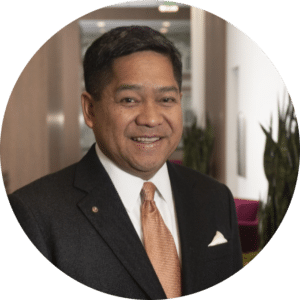
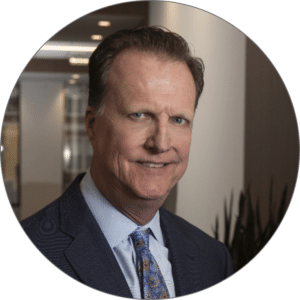
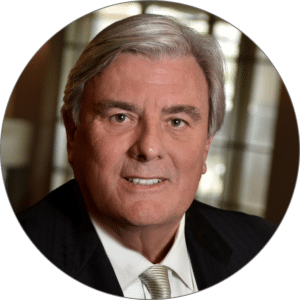
More than 7,000 healthcare executives, a record, attended the recent ACHE Congress on Healthcare Leadership in Houston. Neill Marshall, Chairman, Ivan Bartolome, President and CEO, and Kurt Mosley, Associations Practice Leader, represented HealthSearch Partners at the meeting.
Over three days, more than 60 leaders met with HSP to discuss current challenges and opportunities. Here’s what Marshall, Bartolome, and Mosley heard from these executives.
Financial Uncertainty: “Everyone Knows It’s Coming—No One Knows How Bad.”
If there was one theme that cut across nearly every conversation, it was financial uncertainty. Leaders are not just concerned, they’re bracing. The language we heard repeatedly wasn’t about strategy or growth; it was about survival, preservation, and waiting. Many described the current environment as a “hurricane coming”; you don’t know exactly when it will hit or how severe it will be, but you know it won’t be good.
The combination of reimbursement pressures, potential Medicaid changes, rising uninsured rates, and already thin margins has created a level of hesitation we haven’t seen in years. Several executives noted that organizations are delaying decisions, holding leadership positions open, and conserving cash until there is more clarity. The consensus wasn’t optimistic, just pragmatic. Everyone is preparing for impact, but few believe additional funding or relief will be forthcoming to offset it.
Artificial Intelligence & Technology: Is This the Moment That Tests Epic?
Artificial intelligence was everywhere, every conversation, every hallway discussion, every informal exchange. But what stood out wasn’t excitement—it was uncertainty about execution. Leaders universally agree AI will reshape healthcare operations, yet very few can point to a meaningful, scaled use case inside their own organizations today. At the center of that tension is a growing question: will existing infrastructure, particularly Epic, be able to lead? Several executives raised a provocative but increasingly common thought: are we at the beginning of the moment that ultimately erodes Epic’s dominance?
The concern is not that it will disappear overnight, but that innovation is moving faster outside the traditional EMR ecosystem than within it. If AI-driven tools begin to layer on top of or bypass core systems, hospitals may gradually rely less on their EMR as the central operating platform. That doesn’t happen tomorrow, but for the first time in years, some leaders are openly questioning whether the status quo is sustainable.
Workforce Stability: Improved, But Not Resolved.
Workforce stability was another consistent theme, and for the first time in several years, there was a noticeable shift in tone. Most leaders acknowledged that things have improved. The crisis-level staffing shortages we saw over the past few years have eased, contract labor costs have declined, and turnover in some areas has stabilized. But no one is declaring victory. What we heard repeatedly is that the workforce challenge hasn’t gone away; it’s just evolved. The pressure has shifted from acute shortages to long-term sustainability. Leaders are still dealing with burnout, retention challenges in key roles, and ongoing competition for experienced talent.
There is also a growing concern about the leadership pipeline. Several executives noted that while they have stabilized their current teams, they are less confident that the next generation of leaders will step into those roles. In short, the environment feels more stable, but also more fragile. Organizations have made progress, but there is a clear understanding that it wouldn’t take much disruption for things to tighten again.
Talent Movement: More Sitting Executives Are Quietly Looking.
One of the more telling shifts this year wasn’t said from the podium—it came in one-on-one conversations. Each year at ACHE, we typically meet with dozens of hospital executives, and this year was no different. But, it was markedly different in who initiated those conversations. The number of executives who reached out in advance to request a meeting was easily triple what we’ve seen in prior years. That’s not noise, that’s a signal. More sitting executives than usual are open to opportunities. Not actively on the market, not sending resumes, but listening.
The industry’s uncertainty, combined with restructuring, role eliminations, and leadership position consolidation, has created unease even among those currently employed. In past years, many leaders would have stayed put unless forced to move. This year feels different. There is a growing recognition that roles can change quickly, teams can be restructured overnight, and long-term stability is no longer guaranteed. As a result, more executives are quietly testing the market, meeting with potential partners, and exploring options, not out of dissatisfaction but out of prudence.
A final thought. There is still optimism. While there we had plenty of heavy discussions and we also heard optimism that today’s hospital and health care leadership can navigate the headwinds of change. The leaders we met with expressed a desire to be in front of the change rather than being subject to the change. Their optimism is rooted in the resiliency our industry executives have demonstrated time and time again, since before the creation of the American College of Healthcare Executives. Margins may continue to be challenged moving forward. However, there is still a lot of enthusiasm to serve the communities where our organizations are based. The only true question is, how do we do that well for the patient and the organization with diminishing resources?