

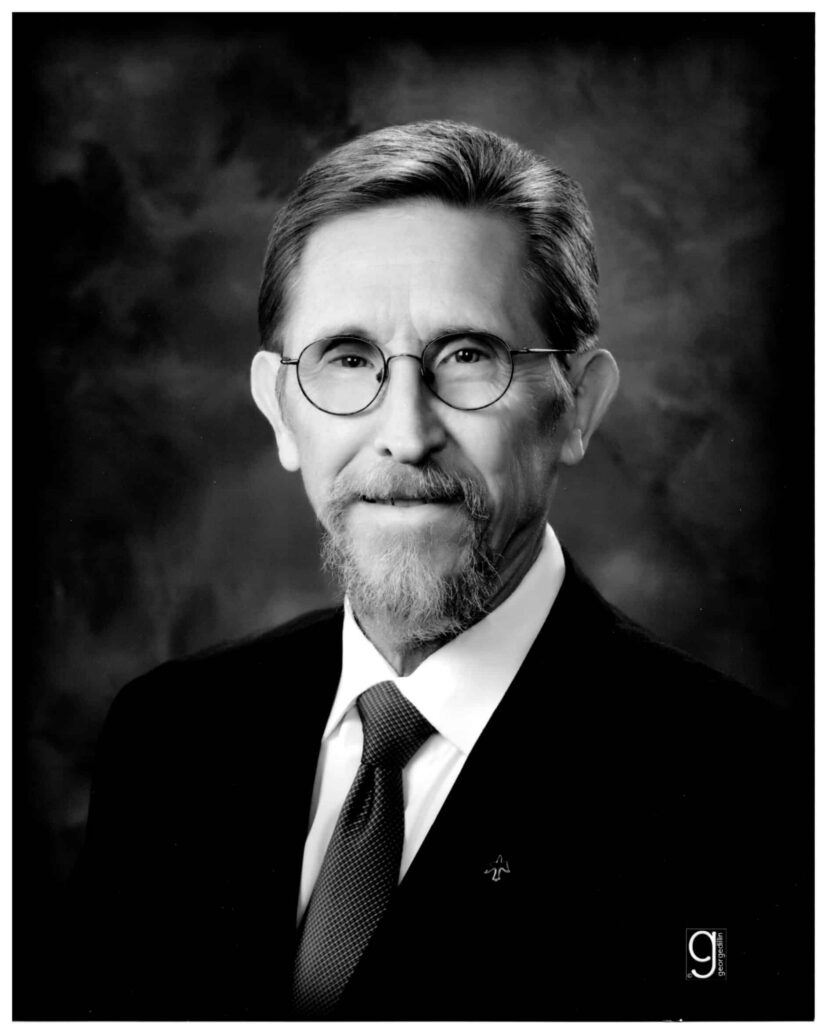
Ray Montgomery served as President/CEO of Unity Health in Searcy, Arkansas, retiring in 2018. A native of Kansas, his healthcare career began in respiratory therapy. He worked in Oklahoma and Texas before coming to White County Medical Center (now a part of Unity Health) in 1988. During his time with the organization, he led the hospital through extensive facility improvements and the acquisition of Central Arkansas Hospital and Harris Hospital as well as several clinics. He was a driving force behind the creation of Unity Health, and he led the organization to become the first hospital in Arkansas to be accepted into the Mayo Clinic Care Network. He and his wife Rebacca currently reside in Searcy.
By Neill Marshall, Chairman, HealthSearch Partners
As part of our continuing First 90 Days leadership series, we have spent the last several months interviewing healthcare CEOs and executives around one central question: What did you intentionally do during your first 90 days to establish trust, shape culture, and set the tone for your leadership? What we discovered was interesting and insightful.
The leaders who were most successful early in their tenure were not always the ones with the boldest strategic plans or the most polished presentations. Rather, they were the leaders who understood the power of symbolic acts.
A symbolic act is a visible behavior that communicates priorities, values, humility, accessibility, or urgency without requiring a speech or memo. Employees carefully watch what a new leader notices, ignores, tolerates, rewards, and models. In many ways, symbolic acts become the real language of leadership during the first 90 days.
We have interviewed CEOs who slept overnight in hospitals to experience life alongside physicians and nurses. Others conducted midnight rounds to understand what happened after administration went home. Some shadowed environmental services staff while wearing uniforms. One CEO intentionally arrived two weeks before his official start date simply to observe how employees treated visitors, whether the emergency department felt secure, and whether neglected landscaping and cluttered signage reflected larger cultural issues.
None of those actions were accidental. They were intentional signals that: People matter… Standards matter… Culture matters.
But one of the most powerful examples of symbolic leadership I have personally witnessed did not involve a grand gesture. It involved a hallway conversation and a stack of dirty dinner plates. That leader was Ray Montgomery.
Ray Montgomery, A Symbolic Leader.
I first met Ray more than 20 years ago, and I was immediately impressed with him as a hospital CEO. Over time, he became one of my favorite hospital CEOs in the country. Anytime I worked on a search where I thought Ray would be a fit, I called him. I had tremendous confidence in him, not simply because he was operationally talented, but because people genuinely trusted him and his symbolic leadership.
Years later, after Ray retired from White County Medical Center, the CEO who succeeded him left the organization. The board brought Ray back as interim CEO while we conducted the search for his replacement. Working alongside Ray during that search taught me more about symbolic leadership than almost any formal leadership training I have ever received.
Being present, being available, listening…really listening.

One afternoon, we were heading to a search committee meeting located deep inside the hospital. Ray told us he would walk us there. We barely made it ten feet before an employee stopped him, or maybe Ray stopped the employee first, to say hello. They talked for a few minutes. Then we started walking again. Within moments, another employee approached him. Then another. Every interaction was warm, personal, and authentic. Employees repeatedly told him how happy they were to have him back.
Then came the moment I will never forget.
A transporter was pushing a patient in a hospital bed down the hall toward us. Before Ray could say anything, the patient sat up and said, “Hey Ray, how are you? Glad to have you back!” Again, Ray stopped and visited.
What struck me most was Ray had been gone from the CEO role for almost five years before returning to the interim role. Yet, ,the emotional connection between Ray and the organization remained.
Eventually, after stopping repeatedly, I asked him how he ever managed to get to meetings on time. Ray smiled and said, “Neill, if I have a meeting in another part of the hospital, I always leave 10 to 15 minutes early because I know there will be people I need to stop and talk to along the way.”
That answer perfectly captured the philosophy behind our entire First 90 Days series. For Ray, relationships were not interruptions to leadership…relationships were leadership.
Constantly looking for ways to serve others.
The second lesson came later that evening during candidate interviews. The search committee, Ray, and I had dinner between interviews. When everyone finished eating, most of us remained seated around the conference table talking while waiting for the next candidate. Without saying a word, Ray quietly stood up and started clearing the table. He gathered plates, picked up trash, straightened the room, and prepared everything for dietary to collect afterward. I remember feeling slightly embarrassed that I had not instinctively done the same thing. The next day, during another interview session and another meal, Ray repeated the exact same behavior.
That is when I realized this was not performative, rather it was simply who Ray was. He constantly looked for opportunities to serve people, help people, and make other people’s jobs easier. That became his symbolic leadership act. And that is exactly why employees, physicians, and even patients still remembered him years later.
In a 2018 interview with 501 Life, prior to his retirement, Ray said the organizational structure at White County Medical Center was “inverted.” “The people who are most important are those giving the care, and if there is a hero among us, it is because every one of those individuals have made a difference in a collective teamwork approach. These are the true heroes of our organization.”
When asked what legacy he hoped to leave for his career in healthcare administration, Ray said simply, “What I hope it will be is that I was a servant, I was faithful to this community, I could be trusted and I was humble.”
One of the biggest misconceptions about symbolic leadership is that it requires dramatic gestures. Usually, it does not. The most powerful symbolic acts are often small, visible, and consistent:
- Stopping in the hallway.
- Learning names.
- Answering the phone.
- Picking up trash.
- Cleaning the table.
- Thanking the night shift.
- Showing up early.
- Listening carefully.
- Making eye contact.
- Being present.
Employees are watching for who you, as a leader, really are.
Employees watch these moments carefully because they reveal whether a leader’s values are real. Long before employees trust a strategy, they decide whether they trust the leader behind it. And during the first 90 days, that trust is earned in small, visible moments that show people who you really are.
Stay tuned for more insights as we continue exploring the innovative tactics used by business leaders to make their first 90 days count.
If you have adopted these tactics, or any others featured in this series, we’d love to hear from you. Please contact us to share your story.

Neill Marshall, Chairman
HealthSearch Partners