
While most leaders prepare speeches and org charts, Matt Fry quietly prepared something far more valuable.
By Neill Marshall, Chairman, HealthSearch Partners, and Tom Spindler, Vice President, HealthSearch Partners

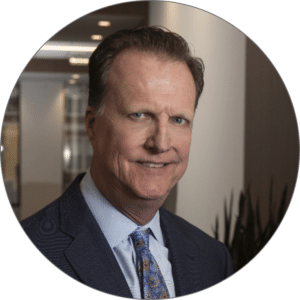
Matt Fry, DHA, MHA, MBA, FACHE, NACD.DC (pictured above), is the president and CEO of Freeman Health System in Joplin, MO. He is an accomplished healthcare executive with nearly 15 years of experience leading operations at several different health systems including Hospital Sisters Health System in Springfield, IL, and Sutter Health in Sacramento, CA.
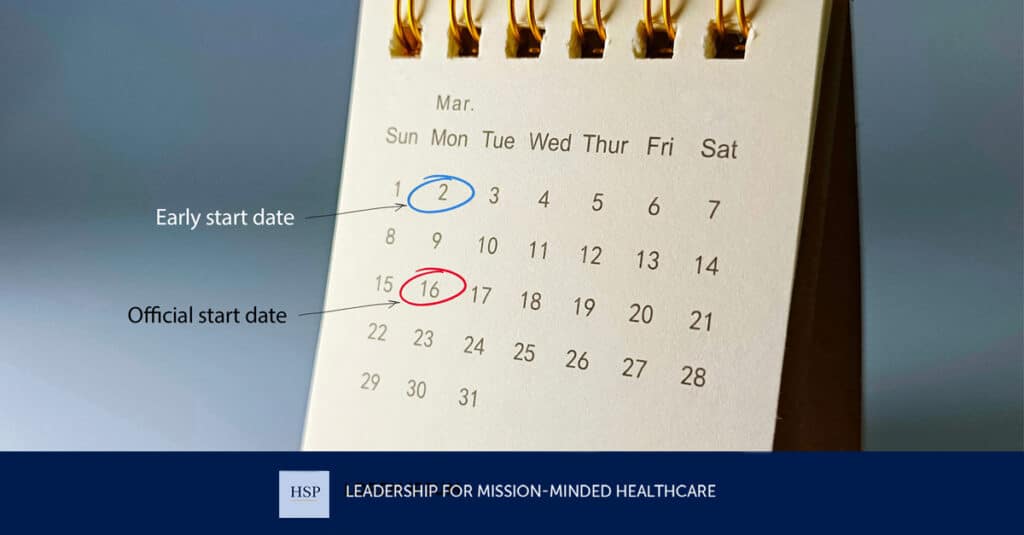
Most CEOs talk about what they plan to do on Day One. Matt Fry put his plan into action two weeks early.
Before his paycheck started, his badge worked, he had an office, before anyone had reason to notice him, Fry, the organization’s new CEO and the first from outside of Freeman Health System to serve in the role in 20 years, walked into the organization as a visitor, unannounced, with no title. That decision set the tone for everything that followed.
Showing Up Before You’re “On the Clock”
Two weeks before his official April 1 start date, Fry began quietly arriving at Freeman’s flagship hospital in Joplin, MO, every day in a suit, without fanfare, and without introducing himself unless someone asked.
He approached the organization the same way any patient, family member, or anxious visitor would. His plan was simple and deliberate:
- He entered through every public door.
- He walked every hallway.
- He tested wayfinding by intentionally getting lost.
- He ate in the cafeteria.
- He asked staff for directions to see how they would respond.
- He wandered into the physician’s lounge to get a feel for the culture.
- He watched how volunteers interacted with visitors.
- He evaluated security at the ED, noting gaps that would allow someone to walk into protected areas.
It was the purest unfiltered version of truth-finding a new leader can experience
This approach was different from, but philosophically aligned with, others in our series.
When Richard Parks began a new CEO role, he moved into the hospital to see how staff really worked and lived. His goal was immersion. Fry’s goal was similar: clarity before credibility.
What He Saw When No One Knew He Was Watching
Fry discovered the kinds of things that don’t surface in interviews, appear on dashboards or in board packets. What he discovered informed his way forward and shaped his approach to cultural change and improvement:
- Volunteers at the main entrance struggled to make eye contact.
- Wayfinding was overly confusing.
- The staff member he asked for help seemed frustrated and overwhelmed.
- ED entry points weren’t as secure as Fry would have liked.
- Banners, signs, and outdated marketing materials cluttered the hallways.
- The landscaping outside the flagship hospital had dead flowers and vegetation, communicating a lack of caring and attention to detail.
Symbolic Moves with Outsized Impact
Once he officially took the reins, Fry didn’t begin with speeches, vision statements, or restructuring. He started with small symbolic actions that set expectations.
- The Dead Flowers – His facilities team was grateful for the directive and replaced them immediately, leading to a widespread feeling of appreciation and recognition.
- The Cluttered Hallways – His marketing team removed oversized banners and outdated signage, signaling discipline.
- The ED Security Gaps – His security team tightened access protocols to restore safety and accountability.
His approach mirrored the philosophy behind Michael Pulido’s “intentional rounding” article. Pulido deliberately took back hallways and service corridors to see the hospital the way staff actually experienced it.
Fry’s two-week pre-start tour accomplished the same thing, just with a head start.
His use of symbolic acts also reflect those taken by Grover Martin, featured in another First 90 Days article. Demonstrating the kind of behavior he expected by picking up trash in the parking lot and answering phone calls on the first ring, his team of young professionals immediately recognized the new cultural norms and immediately put them into action.
Turning Observations into Culture Change
Fry’s two weeks of undercover observation became the backbone of his first 90 days during which his executive launched a comprehensive service and patient-experience overhaul, including:
- Weekly personal patient rounding
- Random unit rounding at all campuses
- A 5/10 courtesy rule
- Ownership principles (“If you see it, you own it.”)
The 5/10 Rule is a simple, straightforward, effective courtesy standard Fry introduced systemwide. The expectation is simple: when an employee sees a patient, visitor, or colleague within 10 feet, they make eye contact and acknowledge the person with a nod or a smile. When that person comes within 5 feet, the employee offers a verbal greeting or assistance. It’s traditional, commonsense hospitality that immediately communicates a heightened level of connection and attentiveness across the organization.
Why It Worked
- No one filtered the truth. Fry saw the authentic culture with its flaws and opportunities with his own eyes, before asking people to adjust their behavior.
- He shifted the culture through action demonstrating to employees, volunteers, physicians, patients, and visitors his expectations. No speeches, memos, or emails were used or required.
- He set standards before setting strategy, earning the trust he needed for bigger changes down the road.
Early Results
- Freeman West pulled together several process improvement teams focused on quality improvement across the hospital.
- The organization recruited nearly 75 physicians and mid-level providers in 2025.
- Fry reorganized the senior executive team to meet the current needs of the organization.
- Fry, along with his executive team and system colleagues, created a comprehensive 5-year strategic plan for the organization in the years to come.
- The organization launched a systemwide patient experience improvement plan.
A New Blueprint for New CEOs
Fry’s strategic approach to his new role establishes an effective model for new CEOs: Show up early. Watch everything. Fix what’s in front of you. Set the tone before you set the strategy.
His quiet two-week head start may be one of the most effective first 90-day tactics we’ve seen.
If you have adopted any innovative tactics during your first 90 days as a healthcare executive similar to those featured in this series, we’d love to hear from you. Please contact us to share your story.