

Ride the Shuttle to Earned Authority
Turning a Daily Commute Into a Leadership Strategy
How Dr. Alejandro Quiroga turned an employee parking lot into an informal leadership intelligence system during his first 90 days
By Neill Marshall, Chairman, HealthSearch Partners and Kurt Mosley, Associations Practice Leader, HealthSearch Partners
Four Key Takeaways
- Where a new CEO spends time sends a message before the CEO ever delivers a speech.
- Frontline proximity provides unfiltered intelligence that formal reporting systems often miss.
- Recognizing patterns matters more than collecting complaints when understanding how an organization really works.
- Listening builds Earned Authority only when followed by action that demonstrates employees have been heard.
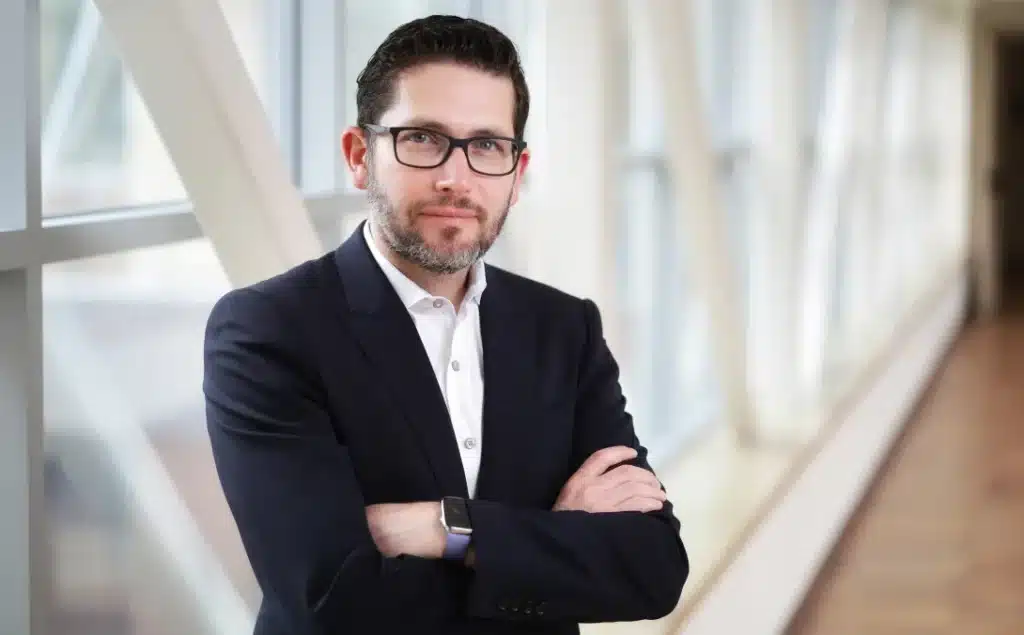
Before Alejandro “Ale” Quiroga, MD, became President and CEO of Children’s Mercy Kansas City, an executive congratulated him on a decision he had supposedly made to give up his executive parking space and park in the remote employee lot, riding the shuttle with staff. There was one problem: Dr. Quiroga had made no such decision and did not even know the shuttle existed. Recognizing the value of the idea, however, he adopted it. Eighteen months later, he was still parking there.
What began as an accidental gesture became an informal leadership intelligence system. The shuttle offered Dr. Quiroga unscripted conversations, fewer hierarchical barriers, and access to information that might never reach the executive suite.
Other healthcare CEOs have found similar ways to get closer to frontline work. Dr. Quiroga’s method was different, but the principle was the same: If you want the unfiltered truth about an organization, go where the filters disappear.
How Can a New CEO Learn What Is Really Happening?
Dashboards, financial statements, employee surveys, quality metrics, and executive briefings provide essential information, but they reveal only part of an organization. Direct contact with employees helps uncover frustrations, workarounds, cultural signals, and recurring problems.
Dr. Quiroga believes employees are less interested in a new CEO’s credentials than in understanding what kind of person they are getting. Can they trust this leader? What does the leader value? Will the CEO understand their daily experiences?
Riding the shuttle helped Dr. Quiroga answer those questions while building relationships with employees he jokingly called his “shuttle buddies.”
Importantly, Dr. Quiroga did not require his executive team to copy his parking decision. He believed that would risk turning an authentic personal choice into a performative gesture. Symbolic leadership has value when it reflects genuine values and continues beyond the initial attention.
When Listening Reveals a Systemic Problem
Children’s Mercy was constructing a roughly $50 million parking garage that would eventually eliminate the employee shuttle. During conversations about the project, Dr. Quiroga discovered that a newly hired shuttle driver had overheard him discussing the garage and realized her job might disappear.
Rather than simply address her immediate concern, Dr. Quiroga recognized a broader planning problem. Why were drivers being hired without an explanation of the garage project? Was there a retention plan? Would employees have opportunities to move into other roles?
Later, Dr. Quiroga spoke with another newly hired driver who already understood the project, its timeline, retention incentives, and opportunities for other employment within the hospital. The organization had addressed the communication gap.
Listening is not the accomplishment. What happens after you listen is the accomplishment.
Other conversations revealed issues involving benefits, revenue-cycle processes, and workflow inefficiencies. One employee responsible for printing patient records described how constant interruptions disrupted her work, despite her concerns about the process.
Such experiences help CEOs understand whether employees feel empowered to question inefficient systems, whether unnecessary obstacles have become normalized, and whether concerns can travel upward.
Dr. Quiroga emphasizes that individual stories matter, but patterns matter more. Repeated concerns across departments may indicate systemic problems. An unusual story can also reveal either an individual issue or a leadership blind spot, both of which warrant investigation.
Why Frontline Proximity Matters
Executive conveniences such as reserved parking, private entrances, and scheduled meetings can gradually insulate leaders from organizational realities. Dr. Quiroga deliberately challenged that separation.
As Children’s Mercy’s parking arrangements evolve, he envisions patients and clinicians receiving the closest spaces, with leaders parking farther away. Walking creates opportunities for spontaneous conversations, observation, and connection outside formal meetings.

During his first 90 days, Dr. Quiroga set a goal of meeting all 9,000 employees, reaching about 94 percent. He began conversations by asking what employees most wanted him to understand and what difficult question they had for him. His chief of staff and communications leader documented issues requiring follow-up.
Dr. Quiroga now aims to meet the entire organization approximately every 18 months, turning employee engagement into an ongoing leadership practice rather than a one-time onboarding exercise.
From Positional Authority to Earned Authority
CEO tours can easily become communications exercises focused on photographs and visibility. Dr. Quiroga believes their real value lies in what leaders learn and what changes as a result.
When sharing stories about employee visits, he focuses on employees and their questions, demonstrating that frontline observations can influence leadership thinking.
A CEO’s title guarantees access to the executive suite, but not necessarily to the truth. Dr. Quiroga’s shuttle experience illustrates how repeated, informal engagement can uncover frustrations, expose communication gaps, identify organizational patterns, and build trust.
The goal is not to ride a shuttle. It is to eliminate enough distance between leadership and reality that the truth has a reasonable chance of reaching the CEO. Sometimes the most important meeting of the day happens before the leader even enters the building.
Neill Marshall,
Chairman
HealthSearch Partners
Kurt Marshall,
Associations Practice Leader
HealthSearch Partners


